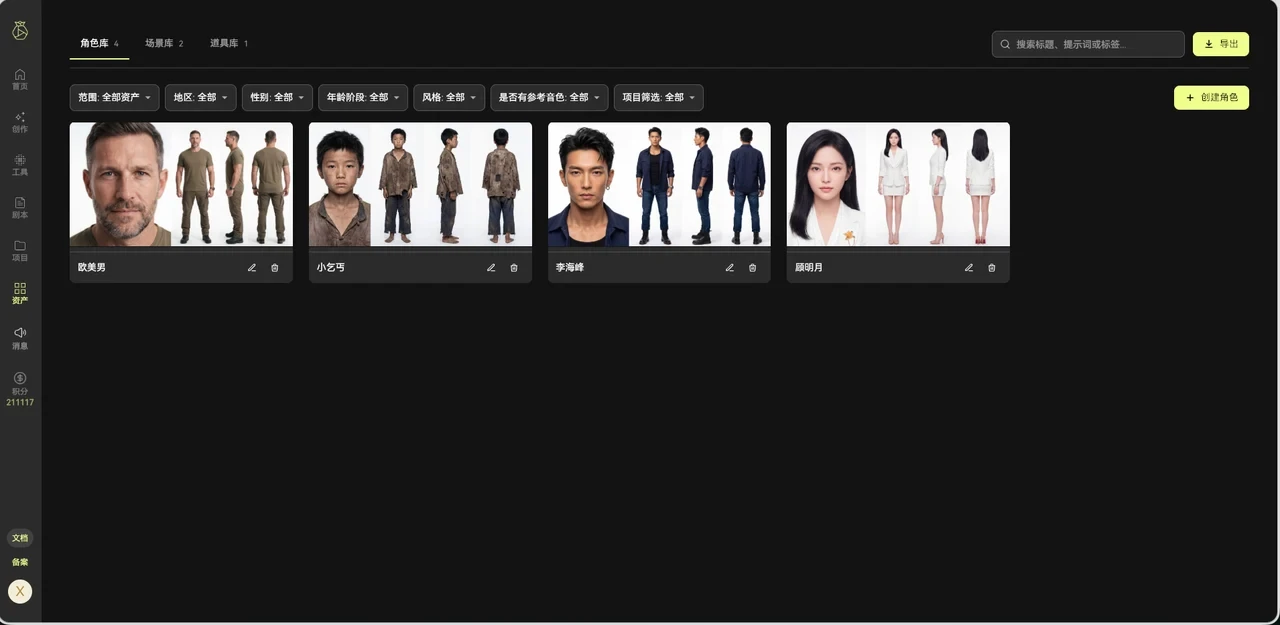
Asset Library: Four Tiers — Public, Team, Personal and Favorites
How project assets differ from the asset library, what each of the four tiers can do and what risk it carries, and how a team accumulates reusable material over time.

How project assets differ from the asset library, what each of the four tiers can do and what risk it carries, and how a team accumulates reusable material over time.
How compute is split on the team plan: member allowances, daily spend caps, per-episode budgets, plus what 30,000 credits means in RMB and how to keep spend under control.
Team membership is officially live, and a redesigned Tools page is out at the same time, making AI film and TV creation more efficient and freer.
The team dashboard tracks only three metrics: credit spend, generation time, and generation attempts. How to read them together, and how to trace waste to a member or a single day.
A cheatsheet for Director Stage shortcuts and mouse controls: move, rotate, scale, camera presets and grid snapping. One page, worth bookmarking or keeping on a second screen.
Director Stage is Bollo's 3D blocking tool for setting camera angle, light direction and character placement. Who it suits, the seven base bodies, camera positions and WebGL requirements.
How to use the Script Marketplace and Script Scout: search by title or author, filter by genre tags, read the evaluation report, then decide whether to preview and buy.
Have a drama that already aired and want to take it apart? Upload the full series to get a synopsis, character profiles and episode scripts, plus the checklist to revise before you download.
Whether a script is worth producing should not rest on instinct. Script scoring rates structure, pacing, character, conflict, commercial appeal and compliance on eight dimensions, then gives a rating.
Already have a finished script and want a structured, editable asset? Script adaptation extracts five result types — episode outlines, emotional curve, beats, characters and insights.